







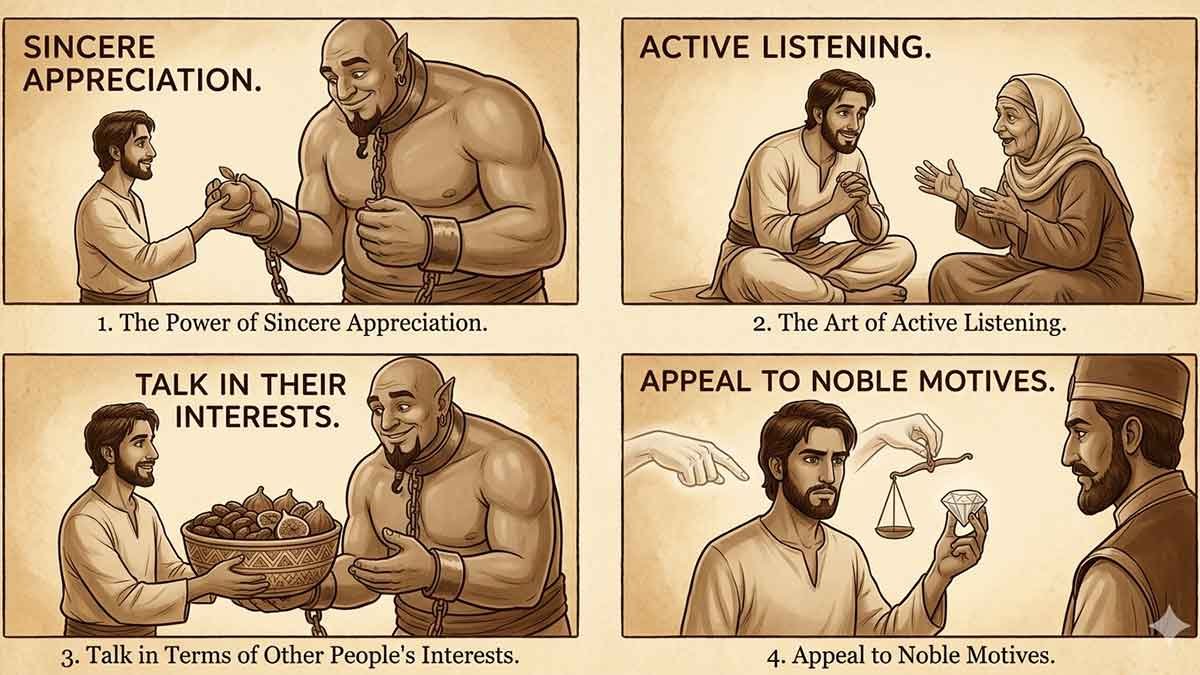
The article “Read This for 20 Minutes and You’ll Outsmart 90% of People!” uses the simple yet powerful story of Ibrahim, a humble well-digger, to bring timeless human principles to life.
Inspired by the classic self-help book How to Win Friends and Influence People by Dale Carnegie, it shows how genuine kindness, empathy, and understanding others can quietly transform relationships and open doors in both personal and professional life.
Through Ibrahim’s grounded wisdom and everyday actions, the article reminds us that success is not always about intelligence or status, but about how well we connect with people and make them feel valued.
Here is a summary of the story and the five key psychological lessons it teaches:
The Story of Ibrahim

Ibrahim lives in a dry valley where finding water is difficult and dangerous, but he still takes the risk every day to support his life and community.
One day, while searching for water, he finds a hidden cave where a Jin (genie) is trapped under a heavy rock. Instead of running away out of fear, Ibrahim chooses to help and frees the Jin.
Grateful for his kindness, the Jin shows him a source of fresh water and gives him precious gems as a reward.
Later, a dishonest royal treasurer named Qasim falsely accuses Ibrahim of stealing, and Ibrahim is sentenced to death.
Just when things seem hopeless, his loyal friend Yunus steps in and discovers the truth behind Qasim’s plan.
With the help of the Jin’s strong, unbreakable diamonds, Ibrahim proves that the royal treasury was actually filled with fake glass, exposing Qasim’s fraud.
In the end, the truth comes out, Ibrahim is saved, and justice is served.
5 Key Lessons to Outsmart Others
1) Give Honest and Sincere Appreciation
One of the most powerful lessons here is the importance of giving honest and sincere appreciation, because deep down, every person wants to feel valued and respected.
It is not about fake compliments or trying to manipulate someone, but about genuinely recognizing the good in others and expressing it openly. In the story, Ibrahim understands this human nature very well. Before making his final request, he does not rush or act out of desperation.
Instead, he calmly and sincerely praises the Sultan for being fair and just, acknowledging the qualities that truly define him as a ruler. This simple act of appreciation softens the Sultan’s attitude and creates a sense of respect and trust between them.
It shows that when people feel seen and appreciated for who they are, they naturally become more open, kind, and willing to listen.
In real life too, this approach can make a huge difference, because a few genuine words of appreciation can build strong connections, reduce resistance, and open doors that force or arguments never can.
Related Stories from SkillHub77
- Why Successful People Win the Day Before 11 AM – A Real Time Management Story
- My Journey to ₹10 Crore Net Worth: The Simple Investing Strategy That Worked
- The Roadmap to Your First ₹1 Crore: A Simple Plan Anyone Can Follow
- The Real Secret Behind a Rich Mindset That Most People Ignore
2) Be a Good Listener
Being a good listener is a simple habit, but it has a powerful impact on relationships and life outcomes. The idea is clear: if you want people to care about you, you must first show genuine interest in them. Listening is not just about staying quiet while someone talks, but truly understanding their feelings, struggles, and thoughts without interrupting or judging.
In the story, Ibrahim shows this quality again and again. Even after a long, tiring day, he listens patiently to his wife’s worries and gives attention to his friend Yunus’s stories, making them feel valued and heard. What stands out even more is how he listens to the Jin’s pain instead of reacting with fear or ignoring it.
That moment of empathy changes everything, leading to unexpected help and fortune. This shows that when you take the time to listen, you build trust, strengthen bonds, and sometimes even open doors to opportunities you never imagined.
In real life too, people remember how you made them feel, and often, just being heard is more valuable than any advice you can give.
3) Talk in Terms of Other People’s Interests
One of the smartest ways to connect with people is to talk in terms of their interests rather than focusing only on your own needs. Most people naturally care about what matters to them, so when you understand that and speak to their desires, things start to flow more easily.
It is not about being selfish or manipulative, but about being thoughtful and aware of what the other person truly wants. In the story, Ibrahim shows this wisdom clearly.
Instead of directly asking the Jin for riches or favors, he first pays attention to what the Jin has been longing for. When he learns that the Jin has not tasted fresh fruits for a hundred years, he goes out of his way to bring them.
This simple but meaningful act shows care and understanding, and it builds a sense of goodwill. As a result, the Jin willingly helps Ibrahim and rewards him without being forced or pressured.
This teaches an important lesson that when you focus on fulfilling others’ needs and speak in a way that aligns with their interests, they naturally feel inclined to support you in return, making relationships smoother and more rewarding in both personal and professional life.
4) Avoid Criticism, Condemnation, and Complaining
One of the most practical lessons is to avoid criticism, condemnation, and constant complaining, because these reactions rarely solve problems and often make situations worse.
When you criticize someone, they usually become defensive and try to justify their actions instead of understanding your point, which only creates distance and tension. Complaining, on the other hand, drains your energy and keeps your focus on problems instead of solutions.
In the story, Ibrahim stands out because he chooses a very different path. Even when he is struggling with poverty or facing the threat of death, he does not blame others or complain about his situation. Instead, he practices “Sabr,” which means patience, and stays grateful for what he has.
This calm and steady mindset helps him think clearly and act wisely, even in difficult moments. Because he does not react with anger or negativity, he avoids creating unnecessary enemies and keeps his relationships strong.
In real life too, this approach can make a big difference, because when you stay patient and avoid harsh reactions, you not only protect your peace of mind but also put yourself in a better position to find practical solutions and move forward.
5) Appeal to Noble Motives
One of the most effective ways to influence people is to appeal to their noble motives, because deep down, most individuals want to see themselves as good, fair, and responsible.
While people may have personal or hidden reasons for their actions, they are often more moved by reasons that align with their values and conscience. In the story, Yunus understands this human nature very well when he tries to convince Qasim’s servant to reveal the truth.
Instead of offering money or trying to pressure him, Yunus speaks to something much deeper. He asks the servant to think about his own conscience and how he would answer to God if an innocent man lost his life because he chose to stay silent.
This approach creates an emotional and moral connection that money could never achieve. It makes the servant reflect on what is right rather than what is profitable.
As a result, the servant finds the courage to do the right thing. This shows that when you appeal to a person’s sense of honor, responsibility, and goodness, you can inspire actions that are stronger and more genuine than anything driven by fear or reward.
The Final Thought
In the end, the biggest takeaway is that real power does not come from force, status, or even pure intelligence, but from understanding people at a deeper level.
These so-called “soft” skills may seem simple on the surface, yet they give you a clear advantage in handling difficult situations and navigating complex relationships.
When you learn to appreciate others sincerely, listen with attention, speak in terms of their interests, stay calm instead of complaining, and appeal to their better nature, you naturally earn trust and respect.
Most people ignore these principles and rely only on logic, arguments, or authority, which often leads to resistance and conflict.
But when you approach people with empathy and awareness, you can influence outcomes quietly and effectively without creating enemies.
Over time, this ability sets you apart, helping you build stronger connections, solve problems more smoothly, and move ahead in life in a way that feels both smart and human.
FAQs
1. What is the main message of this story?
The main message is that success in life is not just about intelligence or hard work, but about how well you understand and deal with people. Simple habits like kindness, patience, listening, and respect can make a huge difference in building strong relationships and solving problems.
2. How do “soft skills” help in real life?
Soft skills help you connect with people, avoid unnecessary conflicts, and influence situations in a positive way. Whether it is at work, in business, or in personal life, these skills make it easier to gain trust and cooperation from others.
3. Why is listening considered so important?
Listening makes people feel valued and understood. When you truly listen, you build deeper connections and often learn things that can help you make better decisions or find new opportunities.
4. What does it mean to talk in terms of other people’s interests?
It means focusing on what matters to the other person instead of only thinking about your own needs. When you understand their desires and concerns, they are more likely to respond positively and support you.
5. How can avoiding criticism improve relationships?
When you avoid criticizing or complaining, people feel less defensive and more open. This creates a positive environment where problems can be solved more easily without damaging relationships.
6. What is the benefit of giving sincere appreciation?
Everyone wants to feel important and respected. Genuine appreciation builds trust, strengthens bonds, and encourages people to respond in a positive and supportive way.
7. Why is appealing to noble motives effective?
People like to see themselves as good and fair. When you appeal to their sense of right and wrong, they are more likely to take positive action compared to when they are motivated only by money or pressure.
8. Can these principles really make someone stand out from others?
Yes, because most people ignore these simple habits and focus only on logic or authority. When you consistently apply these principles, you naturally stand out and handle situations more effectively than the majority.